

Quick Reads When Sibling Rivalry Affects Behaviour
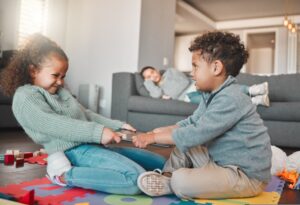
Sibling rivalry is a normal part of growing up with a brother or sister, but when it starts to affect family life or our children’s wellbeing, it can feel sometimes be difficult to manage.
Rather than seeing rivalry as something to ‘fix’, it can be more helpful to understand it as a form of communication, reflecting how children are making sense of relationships, fairness, and their place within the family.
With understanding and gentle guidance, these challenging moments can be reframed as opportunities to strengthen relationships and support emotional development, helping children build empathy, confidence and connection.
Sibling rivalry often begins early, sometimes as soon as a new baby arrives. For an older child, life can change very quickly: routines shift, attention is shared, and their sense of security within the family may feel unsettled.
For younger siblings, growing up alongside an older brother or sister can bring its own pressures, as they try to keep pace, seek recognition, or establish their own identity within the family.
These feelings are deeply human. Children naturally compare, test boundaries, and look for reassurance about their importance. What we see as rivalry may actually be an attempt to check, “Am I still important?” or “Do I belong here too?”, even when it shows up as arguing, teasing or physical conflict.
It’s also worth remembering that children are still developing emotionally and neurologically. They are learning how to recognise, tolerate, and express strong emotions such as frustration, jealousy, or disappointment. When two – or more – children are navigating these feelings at the same time, conflict can escalate quickly.
Post Rating
You must be logged in to vote.
To view this content, you must be part of a school which has access to My Family Coach.
We use cookies to optimise our website and our service.